
Pacific Drive guide for beginners: leave the garage with a clear plan, collect the right resources and return before the storm ruins the run.
Key points
- Pacific Drive is a first-person driving survival game developed by Ironwood Studios and published by Kepler Interactive.
- The official site presents the car as the player’s central companion and the garage as the repair and upgrade base.
- The official press kit lists a February 22, 2024 launch and PlayStation 5, Xbox Series X/S, Steam, Windows Store and Epic Games Store versions.
- The official FAQ confirms motion, visual, difficulty and subtitle accessibility options.

Key points for this Pacific Drive guide
- Repair tires, panels and doors before long routes.
- Bring fuel, repair putty, a scrapping tool and free trunk space.
- Pick each junction around one need: materials, anchor energy, safer roads or progress.
- Do not clear the whole map. Set a goal, then leave.
- Keep time for the storm. One extra container is not worth a lost run.
Pacific Drive beginner guide: choose a goal before leaving
A bad Pacific Drive run often starts before the engine does. The garage is your base, workshop and planning room. Before leaving, choose one simple goal.
You may need common materials, anchor energy, scans or access to a new area. That choice changes your route. If you need scrap, aim for buildings, wrecks and abandoned cars. If an upgrade blocks you, check the fabrication station first.
Use the route planner as a filter. A short junction with good stops is often better than an ambitious drive. The official site confirms that each excursion brings different challenges. It also presents the garage as the place where you restore and upgrade the car.

Prepare the car in Pacific Drive with a checklist
The wagon is not just transport. It is your inventory, shield and way home. A missing door or weak tire can end a run.
Fix anything that protects mobility before comfort. A damaged hood is annoying. A bad tire can strand you when the storm closes in.
- Walk around the car and check tires, doors, panels, hood and trunk.
- Repair tires, engine, battery and fuel tank first.
- Keep tools in an easy-to-reach slot.
- Empty junk from the trunk.
- Check fuel and leave margin for detours.
- Look at fabrication before random looting.

| Priority | Check | Reason |
|---|---|---|
| 1 | Tires and engine | Without mobility, you cannot escape. |
| 2 | Fuel and battery | A breakdown turns a safe road dangerous. |
| 3 | Doors and panels | They absorb damage before key parts do. |
| 4 | Tools | They shape the value of the run. |
| 5 | Trunk space | A useful run needs room for loot. |
Collect useful resources instead of everything
The common trap is treating every container as mandatory. Pacific Drive rewards scavenging, but it punishes standing still. Every stop needs a reason.
Early on, favor resources that keep the wagon repaired and protected. Abandoned cars, gas stations, trailers, technical buildings and ARDA containers are strong stops. Park facing the way out.
Use a simple rhythm: inspect, scrap, load, leave. When the trunk fills up, compare loot with your original goal. Drop common surplus if a rare part appears.

Handle anchors and the garage return
Anchors feed your return and garage progression. When you enter a junction, read the main road first. Note risky detours and possible exits.
Before grabbing an anchor, prepare the wagon. Face it toward a clear road, close doors and keep a quick repair option ready. The zone can become less stable after important actions.
If you already have enough energy to leave, ask one question. Will the next stop unlock a meaningful upgrade? If not, go home. In a Pacific Drive beginner guide, this is the most profitable habit.

Survive Pacific Drive anomalies
Pacific Drive is not a combat game. The official support page says the experience is not focused on guns. Your tools mostly help you survive and keep the car running.
Read anomalies before speeding through them. Slow before the obstacle, not inside it. Watch electric arcs, pulled objects and area effects.
If an anomaly blocks the road, look for a usable shoulder. Reinforced bodywork helps, but it does not replace a clean line.

Upgrade the garage and avoid bad spending
Between runs, do not spend resources on impulse. The best early upgrades reduce future losses: storage, repair capacity, reliable tools and protective parts.
Sort spending into three groups. First, anything that gets you home alive. Second, anything that increases resources brought back. Third, anything that opens tougher areas.
Adapt upgrades to your repeated mistakes. If you ruin tires, improve handling and carry spares. If the trunk fills too soon, expand capacity or loot more strictly.
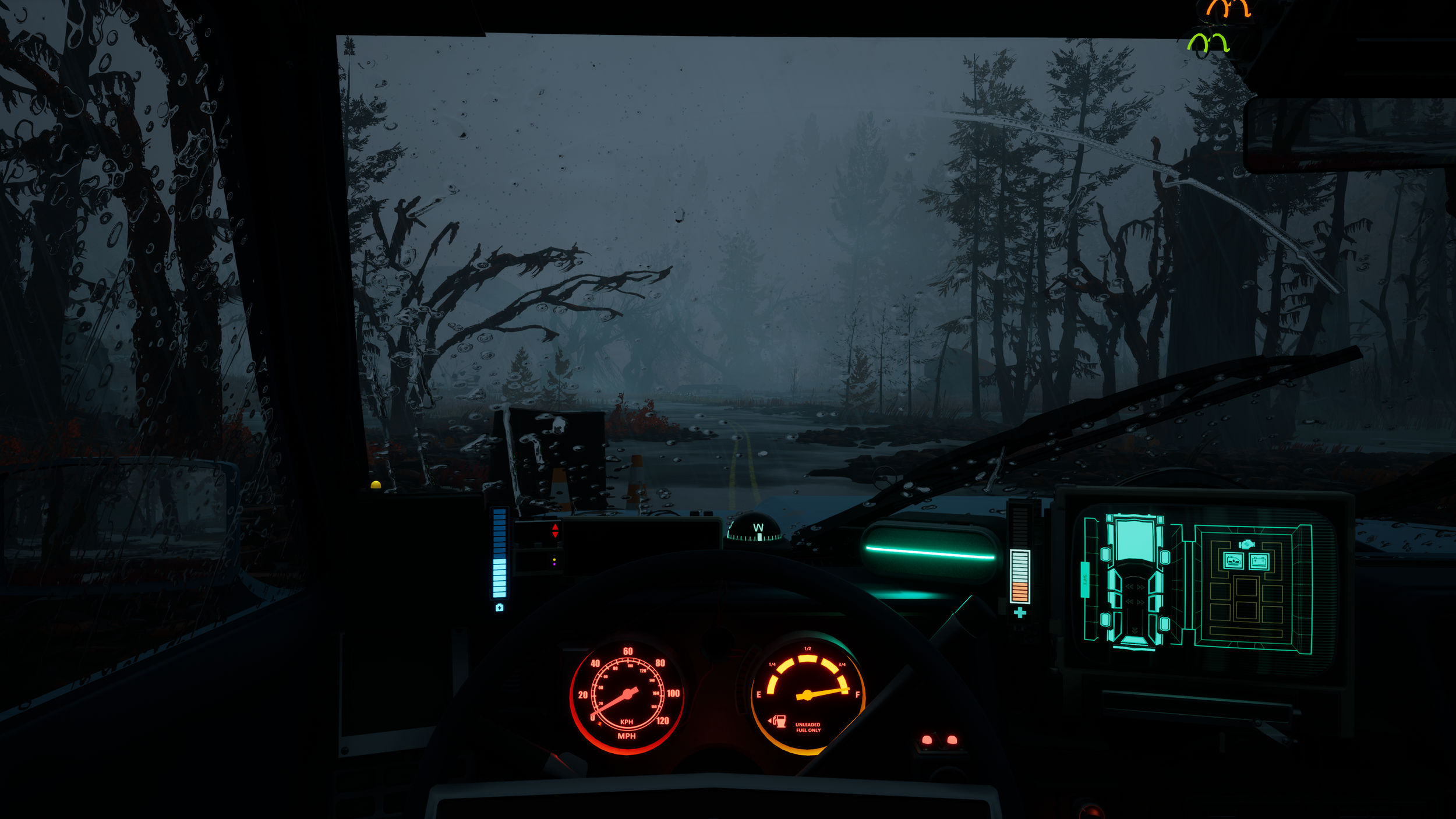
Mistakes to avoid in this Pacific Drive guide
- Leaving without a clear goal.
- Fixing cosmetics before tires or the engine.
- Searching a poor building for too long.
- Taking an anchor before preparing the car.
- Making a detour when the storm is the real threat.
If the game feels tiring, check the options. The official FAQ mentions motion, camera, visibility, brighter nights, rain, fog, difficulty and closed captions.
For more practical coverage, browse jeu.video articles, latest updates and the news section.

Know when to return in Pacific Drive
Learn to leave before disaster. First signal: the car has damage that threatens driving. Second signal: the run objective is done. Third signal: the environment forces you to improvise.
When two signals are active, stop looting. Get back to the road, open the exit and save repairs for emergencies. A short run with useful loot beats a net loss.
To verify official platforms and features, check the Steam listing and the support FAQ. Keep the method simple: short goal, prepared car, targeted loot and an early return.